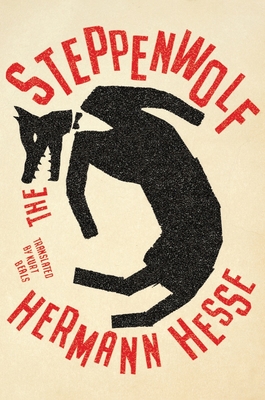
[[Manuscript on Steppenwolf]]
i like the whole shooting at cars bit
whole overwrought activity, the whole surge and strife, the whole vanity, the whole superficial play of a shallow, opinionated intellectuality. And alas! the look went still deeper, went far below the faults, defects and hopelessness of our time, our intellect, our culture alone. It went right to the heart of all humanity, it bespoke eloquently in a single second the whole despair of a thinker, of one who knew the full worth and meaning of man's life. It said: "See what monkeys we are! Look, such is man!" and at once all renown, all intelligence, all the attainments of the spirit, all progress towards the sublime, the great and the enduring in man fell away and became a monkey's trick!
I saw that Haller was a genius of suffering and that in the meaning of many sayings of Nietzsche he had created within himself with positive genius a boundless and frightful capacity for pain. I saw at the same time that the root of his pessimism was not world-contempt but self-contempt; for however mercilessly he might annihilate institutions and persons in his talk he never spared himself. It was always at himself first and foremost that he aimed the shaft, himself first and foremost whom he hated and despised.
and that self-hate is really the same thing as sheer egoism, and in the long run breeds the same cruel isolation and despair.
It was soon obvious that his days were spent with his thoughts and his books, and that he pursued no practical calling. He lay always very late in bed. Often he was not up much before noon
All suffering is a reminder of our high estate.
No, I am sure he has not taken his life. He is still alive, and somewhere wearily goes up and down the stairs of strange houses, stares somewhere at clean-scoured parquet floors and carefully tended araucarias, sits for days in libraries and nights in taverns, or lying on a hired sofa, listens to the world beneath his window and the hum of human life from which he knows that he is excluded. But he has not killed himself, for a glimmer of belief still tells him that he is to drink this frightful suffering in his heart to the dregs, and that it is of this suffering he must die.
But in the midst of the freedom he had attained Harry suddenly became aware that his freedom was a death and that he stood alone. The world in an uncanny fashion left him in peace. Other men concerned him no longer. He was not even concerned about himself. He began to suffocate slowly in the more and more rarefied atmosphere of remoteness and solitude. For now it was his wish no longer, nor his aim, to be alone and independent, but rather his lot and his sentence.
In this aspect suicides present themselves as those who are overtaken by the sense of guilt inherent in individuals, these souls that find the aim of life not in the perfecting and molding of the self, but in liberating themselves by going back to the mother, back to God, back to the all. Many of these natures are wholly incapable of ever having recourse to real suicide, because they have a profound consciousness of the sin of doing so. For us they are suicides nonetheless; for they see death and not life as the releaser. They are ready to cast themselves away in surrender, to be extinguished and to go back to the beginning.
He gained strength through familiarity with the thought that the emergency exit stood always open, and became curious, too, to taste his suffering to the dregs. If it went too badly with him he could feel sometimes with a grim malicious pleasure: "I am curious to see all the same just how much a man can endure. If the limit of what is bearable is reached, I have only to open the door to escape." There are a great many suicides to whom this thought imparts an uncommon strength.
To take his own view of the matter, the Steppenwolf stood entirely outside the world of convention, since he had neither family life nor social ambitions. He felt himself to be single and alone, whether as a queer fellow and a hermit in poor health, or as a person removed from the common run of men by the prerogative of talents that had something of genius in them. Deliberately, he looked down upon the ordinary man and was proud that he was not one. Nevertheless his life in many aspects was thoroughly ordinary. He had money in the bank and supported poor relations. He was dressed respectably and inconspicuously, even though without particular care. He was glad to live on good terms with the police and the tax collectors and other such powers. Besides this, he was secretly and persistently attracted to the little bourgeois world, to those quiet and respectable homes with tidy gardens, irreproachable stair-cases and their whole modest air of order and comfort. It pleased him to set himself outside it, with his little vices and extravagances, as a queer fellow or a genius, but he never had his domicile in those provinces of life where the bourgeoisie had ceased to exist. He was not at ease with violent and exceptional persons or with criminals and outlaws, and he took up his abode always among the middle classes, with whose habits and standards and atmosphere he stood in a constant relation, even though it might be one of contrast and revolt.
Now it is between the two, in the middle of the road, that the bourgeois seeks to walk. He will never surrender himself either to lust or to asceticism. He will never be a martyr or agree to his own destruction. On the contrary, his ideal is not to give up but to maintain his own identity. He strives neither for the saintly nor its opposite. The absolute is his abhorrence. He may be ready to serve God, but not by giving up the fleshpots. He is ready to be virtuous, but likes to be easy and comfortable in this world as well. In short, his aim is to make a home for himself between two extremes in a temperate zone without violent storms and tempests; and in this he succeeds though it be at the cost of that intensity of life and feeling which an extreme life affords. A man cannot live intensely except at the cost of the self. Now the bourgeois treasures nothing more highly than the self (rudimentary as his may be). And so at the cost of intensity he achieves his own preservation and security.
To live in the world as though it were not the world, to respect the law and yet to stand above it, to have possessions as though "one possessed nothing," to renounce as though it were no renunciation, all these favorite and often formulated propositions of an exalted worldly wisdom, it is in the power of humor alone to make efficacious.
He is much more an experiment and a transition. He is nothing else than the narrow and perilous bridge between nature and spirit. His innermost destiny drives him on to the spirit and to God. His innermost longing draws him back to nature, the mother. Between the two forces his life hangs tremulous and irresolute. "Man," whatever people think of him, is never anything more than a temporary bourgeois compromise.
There is, in fact, no way back either to the wolf or to the child. From the very start there is no innocence and no singleness. Every created thing, even the simplest, is already guilty, already multiple. It has been thrown into the muddy stream of being and may never more swim back again to its source.
My resolve to die was not the whim of an hour. It was the ripe, sound fruit that had grown slowly to full size, lightly rocked by the winds of fate whose next breath would bring it to the ground.
It might do for the species, the type; but it was too wide a mesh to catch my own individual soul, my unique and unexampled destiny.
Oh, don’t make a song of your sufferings.
Like all great spirits, Herr von Goethe, you have clearly recognised and felt the riddle and the hopelessness of human life, with its moments of transcendence that sink again to wretchedness, and the impossibility of rising to one fair peak of feeling except at the cost of many days' enslavement to the daily round; and, then, the ardent longing for the realm of the spirit in eternal and deadly war with the equally ardent and holy love of the lost innocence of nature, the whole frightful suspense in vacancy and uncertainty, this condemnation to the transient that can never be valid, that is ever experimental and dilettantish; in short, the utter lack of purpose to which the human state is condemned—to its consuming despair.
"No, I'm not religious, I'm sorry to say. But I was once and shall be again. There is no time now to be religious."
"No time. Does it need time to be religious?"
"Oh, yes. To be religious you must have time and, even more, independence of time. You can't be religious in earnest and at the same time live in actual things and still take them seriously, time and money and the Odéon Bar and all that."
And when at last Tuesday came, the importance of my relation to this unknown girl had become alarmingly clear to me. I thought of nothing but her. I expected everything from her. I was ready to lay everything at her feet. I was not in the least in love with her. Yet I had only to imagine that she might fail to keep the appointment, or forget it, to see where I stood. Then the world would be a desert once more, one day as dreary and worthless as the last, and the deathly stillness and wretchedness would surround me once more on all sides with no way out from this hell of silence except the razor. And these few days had not made me think any the more fondly of the razor.
That evening I sat in my room and tried to read; but I could not. I was in dread of the morrow.
I don't despair. As to suffering—oh, yes, I know all about that! You are surprised that I should be unhappy when I can dance and am so sure of myself in the superficial things of life. And I, my friend, am surprised that you are so disillusioned with life when you are at home with the very things in it that are the deepest and most beautiful, spirit, art, and thought! That is why we were drawn to one another and why we are brother and sister. I am going to teach you to dance and play and smile, and still not be happy. And you are going to teach me to think and to know and yet not be happy. Do you know that we are both children of the devil?
"The pious," she went on meditatively, "after all know most about this. That is why they set up the saints and what they call the communion of the saints. The saints, these are the true men, the younger brothers of the Savior. We are with them all our lives long in every good deed, in every brave thought, in every love. The communion of the saints, in earlier times it was set by painters in a golden heaven, shining, beautiful and full of peace, and it is nothing else but what I meant a moment ago when I called it eternity. It is the kingdom on the other side of time and appearances. It is there we belong. There is our home. It is that which our heart strives for. And for that reason, Steppenwolf, we long for death. There you will find your Goethe again and Novalis and Mozart, and I my saints, Christopher, Philip of Neri and all. There are many saints who at first were sinners. Even sin can be a way to saintliness, sin and vice. You will laugh at me, but I often think that even my friend Pablo might be a saint in hiding. Ah, Harry, we have to stumble, through so much dirt and humbug before we reach home. And we have no one to guide us. Our only guide is our homesickness."
ALL GIRLS ARE YOURS
ONE QUARTER IN THE SLOT
"I am Attorney-General Loering," he said slowly. "You have not only killed my poor chauffeur, but me too, I fancy. Why did you shoot on us?"
"For exceeding the speed limit."
"We were not traveling at more than normal speed."
"What was normal yesterday is no longer normal today, Mr. Attorney-General. We are of the opinion that whatever speed a motorcar travels is too great. We are destroying all cars and all other machines also."